Green Living Magazine · page 22
Go Raw: Eating Food the Way Nature Intended
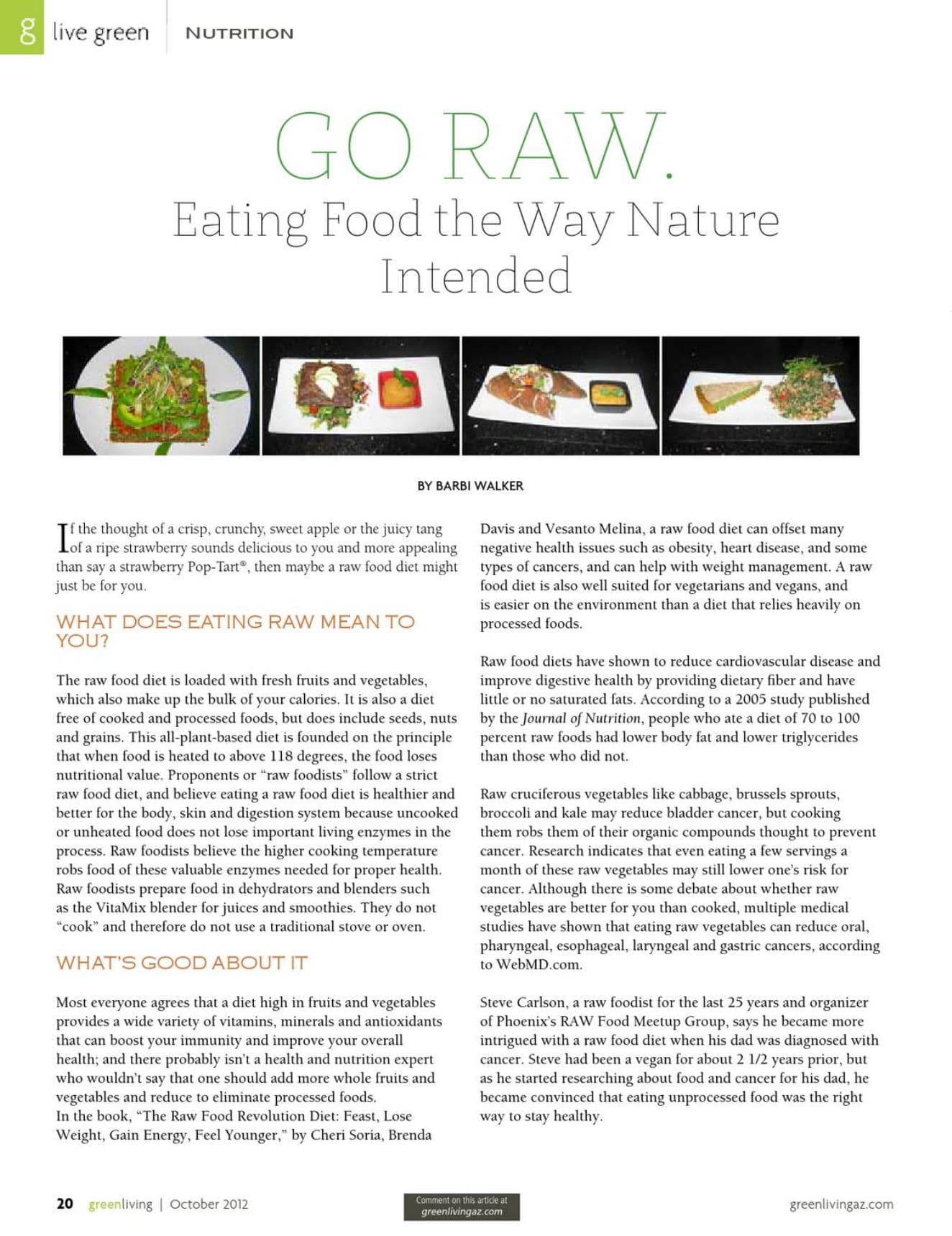
20 greenliving October 2012 Comment on this article at I f the thought of a crisp, crunchy, sweet apple or the juicy tang of a ripe strawberry sounds delicious to you and more appealing than say a strawberry Pop-Tart ® , then maybe a raw food diet might just be for you. WHAT DOES EATING RAW MEAN TO YOU? The raw food diet is loaded with fresh fruits and vegetables, which also make up the bulk of your calories. It is also a diet free of cooked and processed foods, but does include seeds, nuts and grains.
This all-plant-based diet is founded on the principle that when food is heated to above 118 degrees, the food loses nutritional value. Proponents or “raw foodists” follow a strict raw food diet, and believe eating a raw food diet is healthier and better for the body, skin and digestion system because uncooked or unheated food does not lose important living enzymes in the process. Raw foodists believe the higher cooking temperature robs food of these valuable enzymes needed for proper health. Raw foodists prepare food in dehydrators and blenders such as the blender for juices and smoothies.
They do not “cook” and therefore do not use a traditional stove or oven. WHAT’S GOOD ABOUT IT Most everyone agrees that a diet high in fruits and vegetables provides a wide variety of vitamins, minerals and antioxidants that can boost your immunity and improve your overall health; and there probably isn’t a health and nutrition expert who wouldn’t say that one should add more whole fruits and vegetables and reduce to eliminate processed foods. In the book, “The Raw Food Revolution Diet: Feast, Lose Weight, Gain Energy, Feel Younger,” by Cheri Soria, Brenda Davis and Vesanto Melina, a raw food diet can offset many negative health issues such as obesity, heart disease, and some types of cancers, and can help with weight management. A raw food diet is also well suited for vegetarians and vegans, and is easier on the environment than a diet that relies heavily on processed foods.
Raw food diets have shown to reduce cardiovascular disease and improve digestive health by providing dietary fiber and have little or no saturated fats. According to a 2005 study published by the Journal of Nutrition, people who ate a diet of 70 to 100 percent raw foods had lower body fat and lower triglycerides than those who did not. Raw cruciferous vegetables like cabbage, brussels sprouts, broccoli and kale may reduce bladder cancer, but cooking them robs them of their organic compounds thought to prevent cancer. Research indicates that even eating a few servings a month of these raw vegetables may still lower one’s risk for cancer.
Although there is some debate about whether raw vegetables are better for you than cooked, multiple medical studies have shown that eating raw vegetables can reduce oral, pharyngeal, esophageal, laryngeal and gastric cancers, according to Steve Carlson, a raw foodist for the last 25 years and organizer of Phoenix’s RAW Food Meetup Group, says he became more intrigued with a raw food diet when his dad was diagnosed with cancer. Steve had been a vegan for about 2 1/2 years prior, but as he started researching about food and cancer for his dad, he became convinced that eating unprocessed food was the right way to stay healthy. Nutrition GO RAW. Eating Food the Way Nature Intended WHAT TO CONSIDER While most nutritional needs can be met with a raw food diet, making sure you get your recommended dietary needs is an important factor.
Raw food diets can create nutrient deficiencies and low bone density because the diet is low in vitamins B12 and Das well as calcium, all of which are essential for overall health. Vitamin Dand calcium are needed to keep bones healthy and reduce osteoporosis and bone fractures. Red blood cell production, brain function and energy need vitamin B12 to function properly, according to the Journal of Nutrition. Some foods provide more nutrients if they are cooked versus raw, according to the American Dietetic Association (ADA).
The October 2012 greenliving 21 Nutrition nutrients from carrots and tomatoes (to name just a few) are better absorbed by the body if they are cooked. The ADA also suggests that the processing of some foods for the raw diet, such as chopping and dehydrating, can rob foods of important nutrients and recommends raw foodists take supplements. The ADA does not recommend a raw food diet for infants and children. Whether you go all raw or decide to incorporate more raw foods into your diet, your body and health will benefit.
For optimal health, and to ensure you meet your all nutritional requirements on a raw food diet, incorporate a wide variety of foods and seek the advice of a qualified dietitian. SOURCES eatright. org/Media/Spokespeople. aspx?
gov/pubmed/16177198 A raw food diet can offset obesity, heart disease, and some types of cancers. It has shown to reduce cardiovascular disease and improve digestive health, and is better on the environment than a diet that relies heavily on processed foods. Barbi Walker is a freelance writer and an award-winning jourrnalist. Barbi lives in Phoenix with her husband and young son.
A Fresh and Healthy Fusion of Mediterranean and Italian Food Doctor Hummus brings you Herb ‘n Flavors Restaurant & Catering May not be combined with any other offer. Expires HALF OFF ENTREES! Buy One Entree and a Beverage and Receive the 2nd Entree of equal or lesser value HALF OFF! Organic, Local, Healthy & Delicious!
1845 E. Broadway Road, Ste. Tempe, AZ SE Corner of Broadway & K-D Open Sun. -Thurs.
Text recovered from the printed pages; the scan below is the edition of record.
Read it at Green Living Magazine greenlivingmag.com
The printed page