AZ-Lifestyle
KoozA: Circus Meets Performance
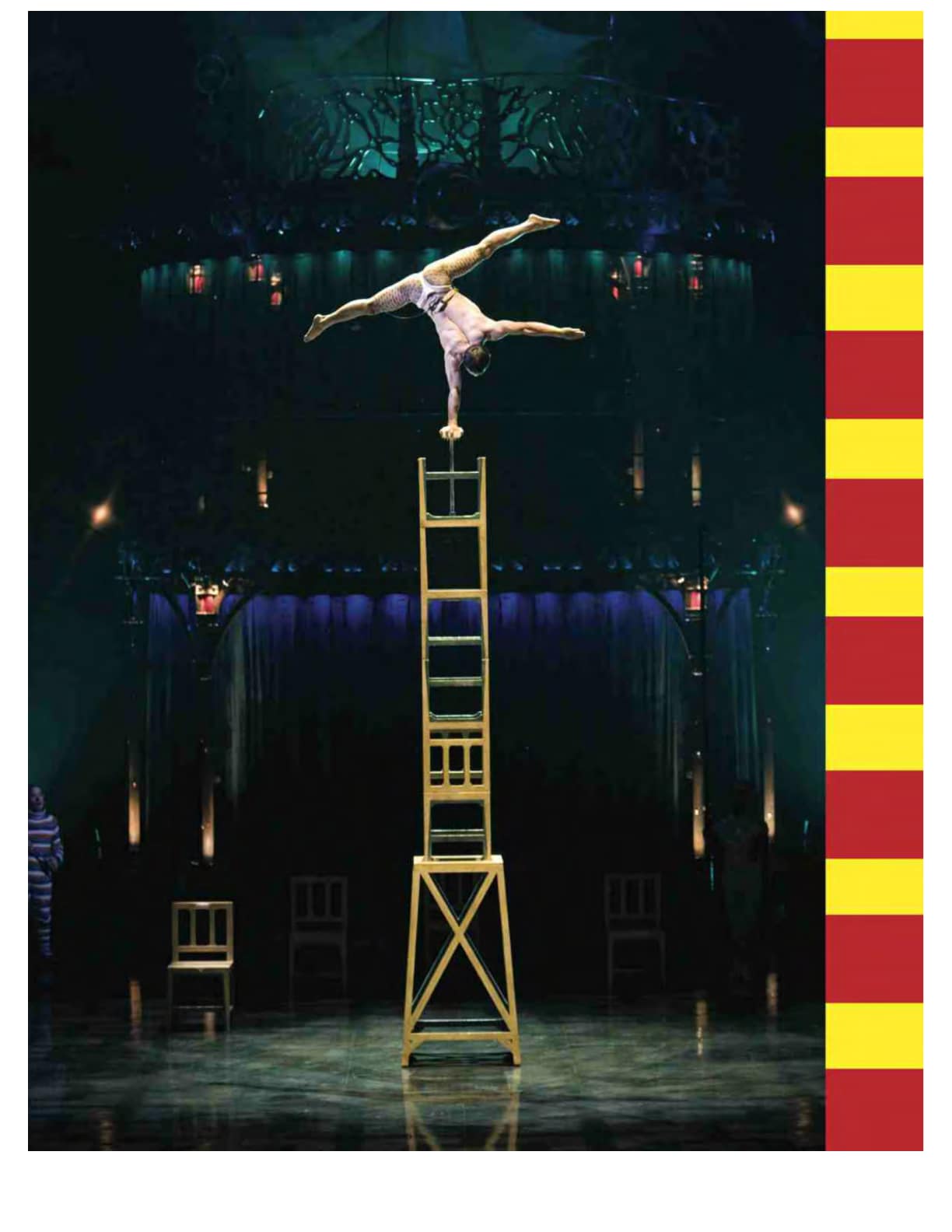
Cirque du Soleil is returning to its roots highlighting street performers and amazing acrobatics with its traveling production, Koozå. Inspired by the Sanskrit word “koza,” meaning box or magical container, Koozå is the big top “circus in a box” production. The show brings the audience and performers together in a traditional circus format to create a more personal experience.
“With such proximity to the audience, performers can connect to the audience in new ways,” says Michael G. Smith, artistic creative director of Koozå. “Shows were getting bigger and bigger; they were just huge,” he says. Capturing all of the elements in one circus ring with the big top in full view focuses the audience’s attention on the artists and acrobatic performances. “This show…brings us closer to the simplicity and humanity of an earlier circus – and closer to the audience. Very convivial,” explains Serge Roy, creation director. “It reminds you of street performance. It’s a mixture of acrobatics and clowning that is really rooted in circus and in the origins of Cirque du Soleil.”
In true Cirque du Soleil fashion, Koozå’s exotic mix of visuals, choreography, costumes and set production electrifies and dazzles while drawing the audience into a unique world. Stéphane Roy, set designer, explains, “I wanted to capture the essence of circus itself by creating a scenographic environment that offers true proximity to the audience and where the danger is palpable—a scenic space in which everything is done out in the open with simplicity and transparency, where even the acrobatic equipment, the structure of the big top and the orchestra are in full view.”
“Koozå is about human connection and the world of duality, good and bad,” says David Shiner, writer and director. “The tone is fun and funny, light and open. The show doesn’t take itself too seriously, but it’s very much about ideas, too. As it evolves, we are exploring concepts such as fear, identity, recognition and power.”
The show begins with a surprise. The Trickster, the genius who created the world of Koozå, bursts onto the scene to surprise The Innocent, who is new to this world and full of curiosity. His journey introduces him to a collection of characters including the King, the Pickpocket, and the Bad Dog. It is from his perspective that the audience experiences this electrifying and exotic world. Koozå explores ideas relating to identity, recognition and power through the contrasts of strength and fragility, turmoil and harmony.
It is the combination of gifted performers, intriguing music, creative choreography and beautiful costumes that bring these themes to life. “For me, it’s about this fusion of choreography evolving into its own language,” says Clarence Ford, choreographer. “It provokes emotions, shows power and gives our audiences excitement.” The gymnasts and acrobats display the beauty and strength that the body can achieve, live musicians and singers accentuate the performance, and the clowns deliver bold slapstick humor that enhances the experience. “The clown takes our deepest human weaknesses and makes them funny,” says Shiner. “The clown is also an anarchist. The clown gets to break the rules.”
In addition to the captivating story are circus acts that take your breath away. The first highlights the House Troupe flying through the air, human pyramids and a “crash bash,” which is a daring dive into a circle of fabric. Another demonstrates extreme muscle control with performers balancing on eight chairs and a pedestal that towers 23 feet high. Balance and strength are the focus of the Hand-to-Hand performance where two flexible performers never lose contact with one another while slowly moving from one unbelievable position to the next. The contortionists also amaze with a new twist on this very old art form, working in harmony and unison to create beautiful shapes with the human form.
In a bow to more traditional circus feats, there is a high wire, unicycle and more, all with a Cirque du Soleil twist. The tightrope walkers effortlessly perform on twin high wires suspended 15 and 25 feet above the crowd. The unicycle number adds a passenger to create excitement and a bit of a commotion while exhibiting incredible strength, grace and control. Flying through the air, the Teeterboard artists twist and spin in multiple somersaults, while over 30 feet above, the stage acrobats do the same on metal stilts. Then an act with hoops is transformed with physical contortion, balance and fluid movement incorporated into the mix. On its own, these skills demonstrate a high level of difficulty; throw in seven spinning hoops and it is quite amazing. The trapeze artist interacts with the Trickster during the show to add to the drama in addition to providing visual thrills. The biggest and boldest act is Koozå’s 1,600-pound Wheel of Death, which is set up in such a way to bring the action as close as possible to the audience. Two artists propel the wheel to super fast speeds. It requires the ultimate commitment of trust and teamwork as they leap and display fearless acrobatics on the rotating apparatus.
This is what the circus is all about – jaw dropping, fist clenching, on the edge of your seat excitement. Add to it a story that touches your heart and makes you ponder life, and you have something truly unique. Reaching out and opening the imaginations is what the circus is all about, Smith says. “With Koozå we’re able to do that. We’re dream makers.”
Starting from a small group of street performers in Quebec, Canada in 1984 its members have always stimulated the emotions and senses of their audiences. Entertaining adults and children alike, performers mesmerized all with fire breathing, dancing on stilts, juggling and acrobatic tricks. This small band of entertainers has grown to an international, high-quality, fine arts and elite sports circus production with thousands of employees from over 50 countries. Koozå alone has had over 1500 performances worldwide since its debut in April 2007 in Canada.
The show runs for a limited engagement in Glendale, starting June 8 in an air-conditioned white Grand Chapiteau (big top), located in the parking lot of the University of Phoenix Stadium.
Text recovered from the printed pages; the scan below is the edition of record.
The printed page